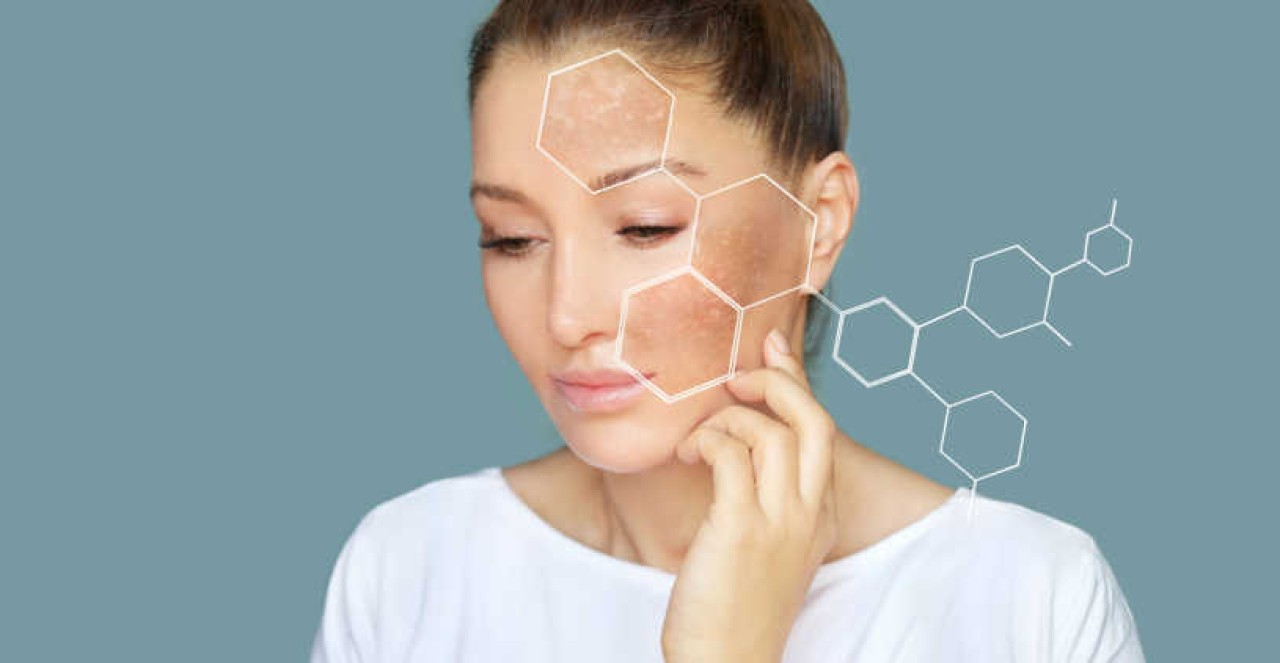
The age spots are caused by the disruption of the melanin production process by the skin cells and involve a change in its color at specific points. They are small brown spots mainly found in areas of the skin that are most exposed to the sun, such as the face, décolleté, and hands.
They are not a dangerous condition but are aesthetically bothersome.
Types of Age Spots
→ Epidermal Type: located on the surface of the skin and usually has a brown color. This type responds well to treatments.
→ Dermal Type: has a greater depth, without specific boundaries and their color is dark, almost black. It responds relatively well to treatments.
→ Mixed Type: these are age spots of intermediate size, without clear boundaries and with a dark brown color. This type responds more difficultly to treatments.
→ Undetermined Type: has unclear boundaries and appears more in darker skin tones.
Causes
→ Exposure to the sun is the main factor that triggers the appearance of spots on the skin.
→ Aging
→ Use of certain cosmetics and medications
→ Hormonal changes
→ Heredity
Treatment
Treatment can be done with various techniques, such as cryotherapy, chemical peels or laser, while for the most superficial age spots, the use of whitening creams is recommended.
The creams contain ingredients that inhibit the synthesis of the melanin enzyme and reduce melanin deposition in skin cells.
These creams should not be used when the skin is tanned or there is intense sun exposure because it may cause disproportionate skin discoloration. They should be used during the autumn and winter months, and should not be used in the summer. The use of sunscreen is essential throughout the year.
The best treatment for age spots is prevention.
We avoid overexposure to the sun, and always use the appropriate sunscreen for our skin.