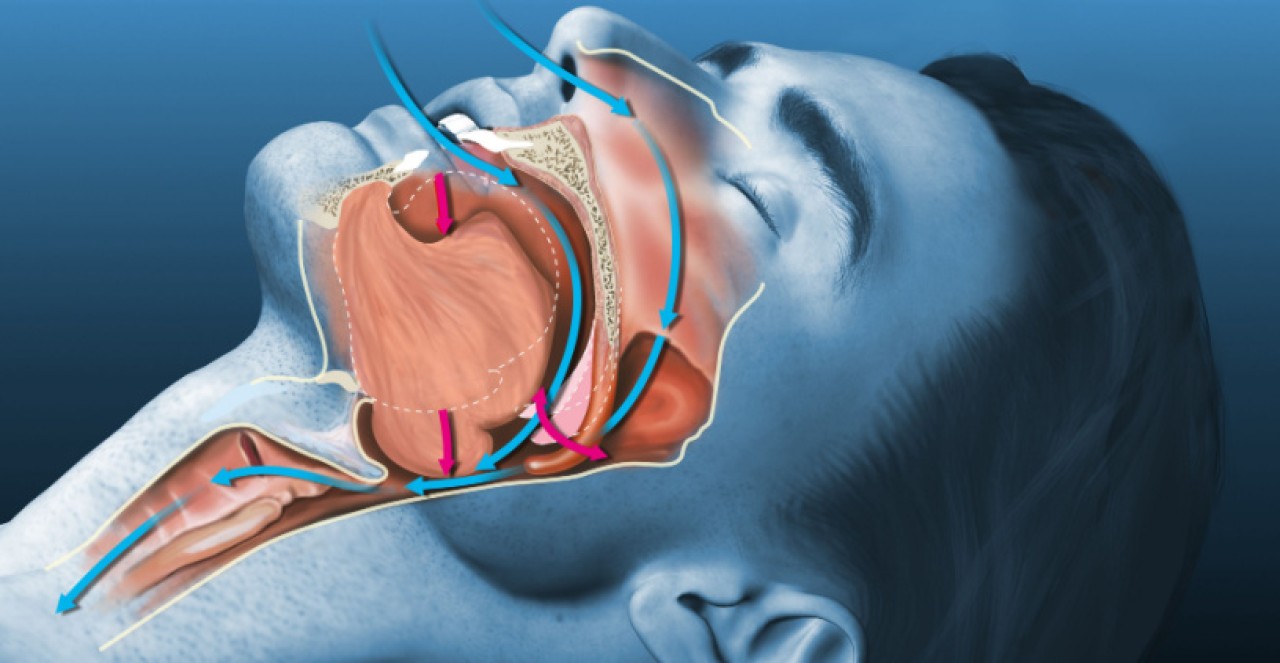
Snoring is called the noise that occurs during sleep due to the vibration of the soft tissues, mainly of the throat, during the passage of air through the narrowed airway of the upper respiratory tract, mainly during the phase of inhalation. Sometimes it is also accompanied by episodes of cessation of breath and oxygenation, the well-known apnea.
CAUSES
The causes that lead to snoring are many and are classified into:
anatomical causes
→ deviated nasal septum
→ hypertrophic nasal sinuses
→ soft tissue growths
→ allergic or drug-induced rhinitis
→ sinusitis
→ hypertrophic tonsils
→ elongated or thick uvula
→ relaxation of the soft palate
→ narrow, lateral or posterior arches of the soft palate
→ tongue hypertrophy
→ low arches of the soft palate
→ retrognathism
→ lower jaw protrusion
→ small mouth opening with narrow lips
predisposition, habits and lifestyle
→ smoking
→ alcohol
→ obesity
→ heavy meals, rich in dairy products and carbohydrates late in the evening
→ sleeping in a prone position
→ sedentary lifestyle
→ use of sedatives, hypnotics and psychiatric medications
→ excessive fatigue
→ older ages due to tissue relaxation
→ men due to hormonal predisposition
The diagnosis of the cause that leads to snoring is made by the doctor initially through an analytical history taking of the patient's lifestyle and is followed by a specific examination, the video-rhinolaryngoscopy with a flexible endoscope, an easy, quick and painless procedure that identifies the anatomical causes.
Some natural ways to reduce snoring are:
→ We raise the head of the bed with large pillows so that the flow of air through the throat and nose is facilitated.
→ We try to sleep on our side
→ We avoid eating late at night
→ We stop smoking and drinking alcohol
→ We try to maintain a healthy body weight
→ We use a humidifier in the room as dry air causes contractions of the larynx resulting in snoring.