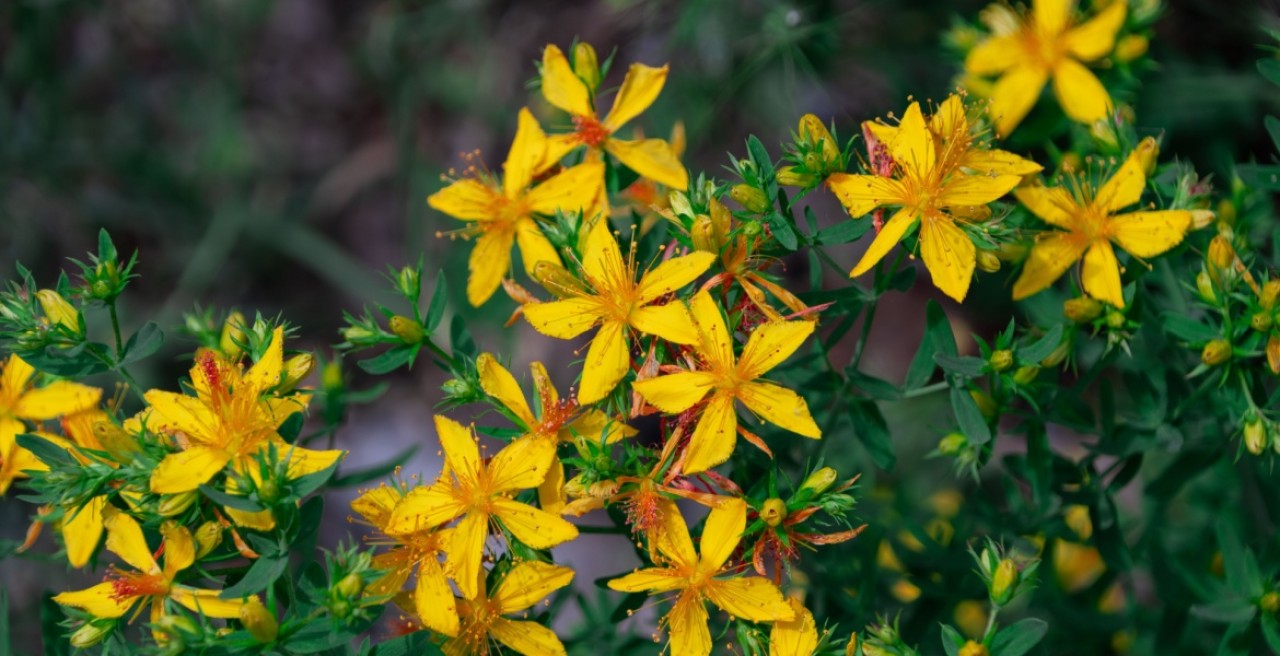
St. John’s Wort (Hypericum perforatum) is a plant with yellow flowers that is mainly found in Europe, but also in parts of Asia and North Africa. It is known for its use in treating depression, however, caution is required as it interacts with many medications.
Historical Overview
The use of St. John’s Wort dates back to ancient Greece, where it was used for "nervous disorders".
During the Middle Ages it was called “herb of John the Baptist”, as it was believed that if collected on June 24th – the day of its feast – it acquired magical properties.
It was also called balm herb, because it was used to heal sword wounds.
Properties & Benefits
St. John’s Wort contains substances such as hypericin and hyperforin, which seem to positively affect neurotransmitters such as serotonin, dopamine and norepinephrine.
Main properties:
- Antidepressant
- Anti-inflammatory
- Antibacterial
- Healing
- Antiviral
- Antioxidant
Therapeutic Uses
- Depression
St. John’s Wort has been used for centuries for mental health. Research has shown that in mild and moderate depression it is as effective as classic antidepressants, but with fewer side effects.
- Menopause
Studies show that it helps reduce hot flashes and depressive symptoms in menopausal women.
- Wound Healing
St. John’s Wort oil (hypericum oil) is used externally for:
- burns (sunburn & others),
- bruises,
- wounds,
- skin irritations.
Side Effects & Interactions
St. John’s Wort may interact dangerously with medications such as:
- antidepressants,
- birth control pills,
- anticoagulants,
- statins.
Possible side effects:
- anxiety,
- insomnia,
- headache,
- diarrhea or constipation,
- photosensitivity.
The most serious complication is serotonin syndrome when combined with antidepressants, which requires immediate medical intervention.
Conclusion
St. John’s Wort is a powerful herb with significant benefits for mental and physical health. It can help with depression, menopause and wound healing. However, its use should be done with caution, due to potential interactions with medications.