Product Description
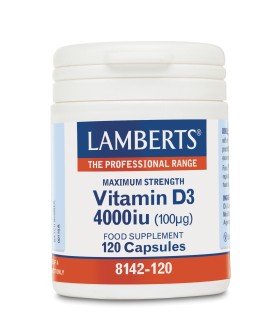
Vitamin D3 & K2
In recent years, international interest has increasingly focused on D3—or, to put it better, its deficiency. In fact, its deficiency has even been characterized as a ‘pandemic’, as the global population showing levels below the threshold in the blood is constantly increasing.
Vitamin D is a fat-soluble vitamin that is divided into two types, D2 and D3, with the latter having a stronger effect on the human body. D acts as a steroid hormone and participates in many metabolic functions. It is impressive that most cells in our body have receptors for vitamin D metabolites.
This means that the vitamin contributes in many ways to the health of our body, with some examples being the maintenance of bone health, immunity, and even mental health and mood.
As most people know, although some foods contain vitamin D, the primary source of D is the sun: the human body synthesizes about 90% of vitamin D through ultraviolet radiation from the sun. According to international guidelines, for maximum production by the body (about 20,000 IU), exposure to sunlight is required between 10-12 noon for 10 to 20 minutes, from April to October, without any coverage from the waist up.
However, it does not seem unreasonable to talk about a deficiency of D in a country like Greece, where sunlight is abundant for most months of the year, to the point where we need to… protect ourselves from it?
But still! Despite being a Mediterranean people, it seems that the deficiency of D3 affects us equally with other countries and poses a real risk rather than… theories.
In fact, in a global study recording vitamin levels in the population, it was found that in northern Europe, the rates of the vitamin are significantly higher than in southern Europe, despite less sunshine!
In a study published in 2017 and collecting results from 107 corresponding studies on vitamin D3 from countries in Southern Europe and the Mediterranean, it appears that despite continuous exposure to solar radiation, vitamin levels are at significantly low levels in a large part of the populations.
In a study conducted in Spain—a country with a climate similar to Greece—169 children with an average age of 9 months were focused on, and vitamin D3 levels in their blood were examined. According to scientists, D3 levels below 30 ng/mL were found in a quarter of children under the age of 2 years. The results emphasize the importance of preventive actions for the vitamin during the first years of life, even in sunny Mediterranean regions.
Similarly, in our country, research as early as 2006 highlights the need for prevention, as measurements in both children and the elderly predict a serious deficiency of the vitamin in the population.
Today, a very recent epidemiological study titled “Increased frequency of vitamin D deficiency in a Greek and Cypriot population” conducted by the Aristotle University of Thessaloniki and the St. George Medical School UK, International Department of the University of Nicosia Cyprus, and presented at the 45th National Conference of Endocrinology, Metabolism, and Diabetes, speaks of the ‘Mediterranean paradox’: in a sample of the Greek and Cypriot population, 73.07% of Greeks and 69.28% of Cypriots in the sample had insufficient vitamin D levels—even if we are talking about two of the sunniest countries in Europe
The possible reasons contributing to vitamin D deficiency are:
- Use of sunscreens and clothing to protect against the sun: perhaps, in reality, the hours during which our body is actually exposed to the sun are much fewer than we think. Peoples with intense sunshine throughout the year, such as Mediterranean peoples, tend to be covered more by the sun compared to peoples from countries with reduced sunshine (which, of course, does not sound at all unreasonable).
- Foods: although our country is surrounded by the sea, the consumption of fish is not as frequent. Although the vitamin levels we get from food are small, they play an important role, as it seems that in high D3 levels in countries like Sweden and Norway, the high consumption of fatty fish and fish oils corresponds significantly.
- Darker skin: it seems that, in general, people with darker skin show a greater risk of vitamin D3 deficiency, as the melanin that makes the skin darker acts as a protective filter from solar radiation.
Of course, the above play an important role, but almost non-existent policies for prevention, as well as the relative ignorance of the issue in our country, are also significant. Moreover, when large percentages of Mediterranean women in pregnancy suffer from vitamin D3 deficiency, it is reasonable that the phenomenon perpetuates and even worsens from generation to generation.
As it becomes apparent, the fact that our country is in the Mediterranean, with its sunny climate for most months of the year, does not mean anything, ultimately, for the levels of vitamin D in the population. The risk of D3 deficiency, with all the subsequent risks it entails, is (if not greater) the same for peoples like ours and those with less mild climates. The same goes for the need for knowledge, prevention, and protection from its consequences.
Beyond vitamin D3, it is also crucial to mention the role of vitamin K, as they act synergistically.
Vitamin K was discovered in 1929 as an essential component for blood clotting.
However, there are two forms of vitamin K:
- Vitamin K1 or otherwise phylloquinone, which is mainly found in green leafy vegetables and plays a decisive role in blood clotting.
- Vitamin K2 or otherwise menaquinone, which is mainly found in animal foods such as eggs, whole dairy products, and butter as well as in fermented foods such as yogurt, cheese, and natto (a type of soy). The most important forms are MK-4 and MK-7. However, apart from foods, K2 is produced by the bacteria of our intestinal flora and then circulates throughout the body.
In case someone cannot consume fatty foods or they are not available in their environment, taking supplements is a good alternative. The benefits can be enhanced when combined with the simultaneous intake of vitamin D3, as it has been found that the two vitamins have a synergistic effect as explained below.