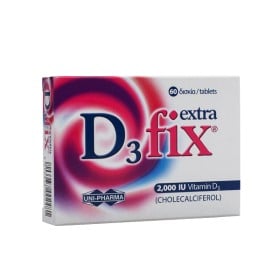
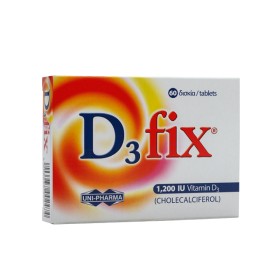
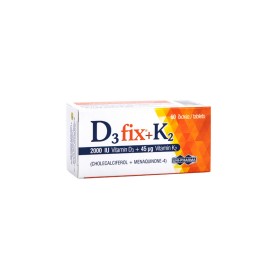
Nutritional supplement with vitamin D3 (cholecalciferol)
Contents: 1 BOTTLE OF 30ML, with strawberry flavor
GLUTEN-FREE – LACTOSE-FREE
Other ingredients: Water, potassium sorbate, citric acid
Sweetener: Sucralose
Recommended daily intake:
Children 0-12 months: 2 drops daily usually during a meal or as directed by a doctor.
Children 1-18 years: 3 drops daily usually during a meal or as directed by a doctor.
Adults: 6 drops daily usually during a meal or as directed by a doctor.
__________________________________________________________________
Vitamin D3 is produced in the skin by the action of ultraviolet radiation (UVB 290-315nm). About 80% of the total daily production is produced in the skin, while the remaining 20% comes from food.
The production of vitamin D in the skin is influenced by many factors:
• Sun exposure
• Use of sunscreen (sunscreen with a protection factor > 8 reduces vitamin D synthesis by up to 90%)
• Clothing (covered body parts)
• Amount of melanin (the black race shows lower levels of vitamin D)
• Time of year (significant reduction in winter months)
• Latitude (increasing latitude, i.e. from the equator to the poles, limits the ability to synthesize vitamin D)
• Age (the elderly have reduced production capacity)
• Obesity (vitamin D is absorbed by adipose tissue)
• Air pollution (mainly in urban centers reduced ultraviolet radiation is observed)
What causes vitamin D deficiency
Reduced intake of vitamin D leads to reduced absorption of calcium and phosphorus from the intestine, resulting in reduced concentration in the body. In children, it leads to rickets, while in adults it leads to muscle weakness, increased phosphorus excretion, tetany, osteomalacia and osteoporosis.
In pregnant women and newborns, it leads to injuries to the maternal pelvis during childbirth, fetal malformations, as well as weakness of the fetus's teeth.
Rickets, is the bone condition that leads to poor growth with weak bones, delayed growth and immunodeficiency.
Osteomalacia is the disease in adults due to long-term lack of vitamin D. It is characterized by an increase in volume and reduction in mineralization of the bones. Osteomalacia leads to significant bone loss in the cortical tissue with an increased risk of falls and fractures. Clinical symptoms are muscle weakness, difficulty walking and osteopenia.
About 6% of men and over 20% of women over the age of 50 suffer from osteoporosis, while 1 in 5 men and 1 in 3 women will sustain an osteoporotic fracture after the age of 50. Also, 75% of women who have osteoporosis are unaware of it.
Vitamin D deficiency can lead newborns and young children for the rest of their lives to the risk of developing Rheumatoid arthritis, Diabetes, Parkinson's, Alzheimer's, Multiple Sclerosis & Intestinal inflammation, due to poor function of the immune system.
Also, people with low levels of vitamin D may develop pancreatic, skin, endometrial, breast, prostate, rectal and intestinal cancer, or even lymphoma. Furthermore, low levels of vitamin D have been linked to risk factors for cardiovascular diseases such as hypertension, myocardial infarction, cerebral congestion, heart failure, as well as diabetes mellitus.
Other actions of Vitamin D:
• Regulates the normal function of the immune system
• Regulates blood pressure (reduction of renin)
• Contributes to the improvement of muscle function
• Affects CNS function – positive action in patients with multiple sclerosis
• Acts on intermediate metabolism – increase in insulin secretion
Warnings:
- Do not exceed the recommended daily dose.
- Dietary supplements should not be used as a substitute for a balanced diet and a healthy lifestyle.
- This product is not intended for the prevention, treatment or cure of human disease. Consult your doctor if you are pregnant, breastfeeding, under medical treatment or have health problems.
- Keep out of reach of children.
EOF Notification Number : 57612/23-6-2107
The EOF notification number does not constitute a marketing authorization from the EOF




 8
8