Close
Sign in to your account
My cart Close minicart icon My cart

Products: {{countCartProducts}}
Total : {{(cartTotal * selectedCurrency.rate).toFixed(2)}}€ - {{(cartDefaultCouponDiscount * selectedCurrency.rate).toFixed(2)}}€ = {{((cartTotal - cartDefaultCouponDiscount) * selectedCurrency.rate).toFixed(2)}}€ {{(cartTotal * selectedCurrency.rate).toFixed(2)}}€
Search Close search

CeraVe Acne Skin

Acne and its Management with CeraVe Products

Acne-Prone Skin: Causes, Types, and Care

Acne-prone skin requires a mild yet effective skincare routine to stay healthy. The products from CeraVe are designed to tackle acne-prone skin without causing dryness or irritation, and to protect the skin's natural barrier thanks to 3 essential ceramides. When used systematically, they help reduce blemishes, minimize black spots, and prevent new outbreaks.

What is Acne?

Acne, scientifically known as acne vulgaris, occurs when pores become clogged with sebum, dead cells, and bacteria. Factors such as stress, air pollution, hormonal changes, and certain greasy cosmetics can exacerbate acne. Moreover, genetic predisposition plays a significant role: if someone in the family had acne, there is a higher likelihood of it appearing in you.

Symptoms of Acne

Acne can manifest as individual blemishes or clusters of blemishes in areas with sebaceous glands, such as the face, chest, shoulders, and back. Blackheads and cysts are different forms of acne. For instance, blackheads appear as small black spots, while cysts are large, painful swellings with pus beneath the skin.

Acne in Adults

Although many associate acne with adolescence, it can occur at any age. In fact, acne affects approximately 9.4% of the global population and is the most common skin condition in the USA.

Main Types of Acne

There are various types of acne you might encounter:

  • Blackheads: Dark spots that appear when pores are clogged with sebum.
  • Whiteheads: Similar to blackheads but lighter in color.
  • Pimples: Small red bumps on the skin.
  • Pustules: Red bumps filled with pus.
  • Cysts & Nodules: Red, painful lesions beneath the skin.

Care for Acne-Prone Skin

To manage acne, a daily skincare regimen is recommended, including:

  • Acne cleanser to remove sebum and bacteria.
  • Light moisturizer to maintain hydration without clogging pores.
  • Sunscreen with broad-spectrum protection to avoid complications from sun exposure.
  • Topical treatment with ingredients like salicylic acid or benzoyl peroxide.

Should I Use Moisturizer if I Have Acne?

A common myth is that acne-prone skin doesn’t need hydration. In reality, hydration is essential to maintain a healthy skin barrier. Lightweight moisturizers, such as CeraVe AM & PM Facial Moisturising Lotion, are recommended to provide hydration without clogging pores.

CeraVe Products for Acne

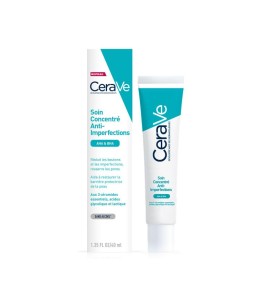
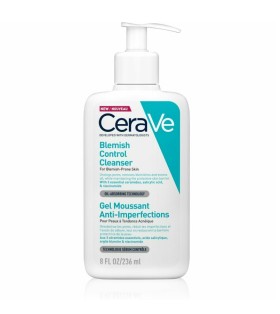
CeraVe offers the Blemish Control series with 2% salicylic acid, including the CeraVe Blemish Control Cleanser and the Blemish Control Gel. These products help reduce blackheads and improve visible pores when used consistently.

Help from Resurfacing Retinol Serum

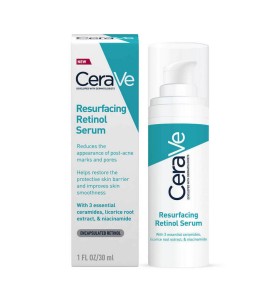
For those with acne signs, the CeraVe Resurfacing Retinol Serum helps reduce marks and improve pore appearance. It’s ideal for evening out tone and achieving clearer skin.

For personalized advice, it’s always best to consult a dermatologist, especially if acne affects your daily life.


//