Close
Sign in to your account
My cart Close minicart icon My cart

Products: {{countCartProducts}}
Total : {{(cartTotal * selectedCurrency.rate).toFixed(2)}}€ - {{(cartDefaultCouponDiscount * selectedCurrency.rate).toFixed(2)}}€ = {{((cartTotal - cartDefaultCouponDiscount) * selectedCurrency.rate).toFixed(2)}}€ {{(cartTotal * selectedCurrency.rate).toFixed(2)}}€

Search Close search

La Roche Posay Hydraphase HA

Hydraphase HA La Roche-Posay: pure hydration for sensitive skin

Hydraphase HA is La Roche-Posay's facial hydration range for sensitive and dehydrated skin. The common active ingredient in all products is hyaluronic acid, a molecule that retains water within the upper layers of the epidermis, combined with La Roche-Posay Thermal Water that gives the soothing dimension to the formula. It is aimed at anyone who feels their skin is pulling, dull or rough to the touch, regardless of whether it is dry, combination or oily skin type. The textures are carefully designed to be light, so that hydration does not translate into weight and shine.

The name confuses many people and people spell it in many ways: Hydraphase, Hydrafase, Hydraphaze, Idraphase, hydrafeis, hydrafase, Hydraphase HA, Hydraphase Intense, as well as the brand as La Roche Posay, La Roche-Posay, Laroche Posay, larose posay, la rose posay or just Roche Posay. All these spellings lead to the same range, so don't worry if you searched for it differently.

Dehydrated skin and dry skin are not the same thing

The most common misconception in facial care is that dryness and dehydration describe the same condition. They do not. Dryness is a skin type and refers to a lack of lipids, meaning the skin produces little sebum and few ceramides, so its barrier is poor in oily material. It is a relatively stable characteristic, you carry it for years and usually know it from childhood. Dehydration, on the other hand, is a condition, not a type. It refers to a lack of water in the stratum corneum and can appear, go away and reappear within the same year depending on conditions.

From this distinction comes something that surprises many: skin can be oily and dehydrated at the same time. Oiliness is measured in sebum, dehydration is measured in water, and the two sizes are independent. In fact, the most common path to oily and dehydrated skin is excessive attempts at de-oiling. Aggressive soaps, cleansers with alcohol, frequent chemical peels and continuous use of drying acne products remove along with the sebum the lipids that kept the water inside. The skin loses water, feels tight, and often responds by producing even more sebum. This is how one reaches the paradoxical face that shines in the T-zone and simultaneously pinches and flakes.

What generally causes water loss. The sun and UV radiation, atmospheric pollution, dry air from air conditioning and heating, very hot showers, wind, air travel, lack of sleep, smoking and certain treatments that dry the skin. The result appears in a recognizable way: the surface becomes rough to the touch, the color dulls, the fine lines around the eyes appear more intense during the day, makeup sits unevenly and often clumps into small patches. When the stratum corneum has less water, the natural exfoliation of cells slows down and dead cells remain on top, which is why dullness and roughness always go together.

The logic of a range like Hydraphase HA is exactly this: to give water and molecules that retain it, with textures light enough to be used by someone who cannot tolerate heavy creams. It is about cosmetic hydration of the epidermis and improvement of the skin's appearance, not medical intervention.

What to watch out for when choosing a hydrating product for dehydrated skin

  • Texture before everything. The same need for water is served by a gel cream or a rich cream. If your skin shines during the day choose a light texture, if it pulls and flakes choose a rich one.
  • Combination of hydrating and retaining ingredients. Hyaluronic acid draws and holds water, but it also needs a texture that limits evaporation, otherwise the water leaves again.
  • Tolerance on sensitive skin. If your skin reacts easily, look to see if the product is dermatologically tested and if the formula is designed with a limited number of ingredients.
  • Compatibility with the rest of the routine. A hydrating product should work under sunscreen and under makeup, without making balls and without leaving a greasy film.

What the Hydraphase HA range contains

  • Hyaluronic acid. The central active ingredient of the range. It is a molecule that has the ability to bind multiple times its weight in water and keep it in the upper layers of the epidermis. According to the manufacturer, the hyaluronic acid used in the newer products of the range comes from green biotechnology, i.e. from a fermentation process and not from an animal source.
  • La Roche-Posay Thermal Water. The brand's signature ingredient, rich in selenium and trace elements. In the range it adds the soothing dimension, which is important when dehydrated skin is also irritated.
  • Light, carefully designed textures. It is not an ingredient in the narrow sense, but it is a design choice that determines the result. The range is made so that the feeling on the skin remains light and absorption is fast.
  • Formulas for sensitive skin. The range explicitly targets sensitive and dehydrated skin, with formulas designed for good tolerance. For the exact composition of each code always consult the packaging, as formulas are updated.

The products in the range and how they differ

  • Hydraphase HA Light. The light daily hydration for normal to dry sensitive skin. Gel cream texture that absorbs quickly and leaves no greasy feeling. It is the choice if your face shines during the day or if you live in a hot climate. According to the manufacturer, it offers up to 72 hours of intense hydration.
  • Hydraphase HA Rich. The rich version of the same logic, for dry to very dry sensitive skin. Thicker texture, more intense nourishing feeling, better choice for winter or for skin that pulls immediately after a shower. Also with a claim of up to 72 hours of hydration from the manufacturer.
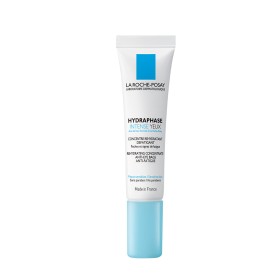
  • Hydraphase HA Intense Eyes. Eye cream with hyaluronic acid, for the very thin area around the eyes where dehydration appears first. It targets hydration and improvement of the tired eye appearance.
  • Hydraphase Intense Serum. The hydrating serum of the range, with a fluid texture that goes before the cream. It is the step that adds intensity when the cream alone is not enough, especially during periods of intense dehydration.
  • Hydraphase Intense Legere. Light texture hydrating cream of the previous generation of the range, for combination to oily dehydrated skin.
  • Hydraphase Intense Riche. The rich corresponding cream of the same generation, for skin with greater need for nourishment.
  • Hydraphase UV Intense Legere and UV Riche. The versions that combine hydration with sun protection in the same day cream. They are convenient for anyone who wants fewer steps in the morning. Be careful, the protection factor of a hydrating product does not replace a regular sunscreen when exposed to the sun for many hours, and in any case protection needs to be repeated during the day.
  • Hydraphase Masque. Hydrating mask in sachets, for use as needed when the skin suddenly appears dull and tight, for example after a trip or after the sun.

When people use it

At the end of summer, when the sun and the sea have left the face rough and dull. In the middle of winter, when heating dries the air of the house and office and the skin pulls from the morning. In people who travel frequently by plane and see their face change in a few hours. In those who follow acne treatment and have ended up with skin that both shines and flakes, where the light texture is the only tolerable solution. In men after shaving who want something that does not weigh down. And in many people simply as the daily hydration base under sunscreen and makeup.

The products in the range are cosmetics and are not medicines. If your skin presents persistent redness, intense itching, flaking that does not subside, sores or a rash that persists, consult a dermatologist instead of constantly changing hydrating products.

Frequently asked questions

What is the difference between Hydraphase HA and Hyalu B5?

Both ranges of La Roche-Posay have hyaluronic acid, which is why they are often confused. The difference is in the targeting. Hydraphase HA is a range of pure hydration for sensitive, dehydrated skin, with light everyday textures. Hyalu B5 additionally targets the appearance of wrinkles and barrier repair, combining hyaluronic acid with vitamin B5. Roughly speaking, if your concern is hydration and comfort you choose Hydraphase HA, if your concern is additionally the anti-aging dimension you look at Hyalu B5. For the exact composition of each product consult the packaging or ask your pharmacist.

What is the difference between Light and Rich?

The active ingredient is the same logic, but the texture changes. Light has a gel cream texture and is aimed at normal to dry sensitive skin or anyone who cannot tolerate weight on the face. Rich is thicker and is aimed at dry to very dry sensitive skin. Many use Light in summer and Rich in winter.

Does it work for oily skin with acne?

The light texture of the range is usually tolerated by oily skin and can help with the feeling of comfort when an acne treatment has dehydrated the face. However, it is not a product for acne and does not act on pimples. If your concern is acne, look at the brand's corresponding ranges for combination to oily skin and, if the condition is intense or leaves marks, consult a dermatologist.

Does it work for atopic dermatitis or eczema?

No. Atopic dermatitis and eczema are skin conditions that need assessment and monitoring by a doctor. Hydraphase HA is a range of cosmetic facial hydration and was not designed for this use. For atopic skin there are other, specially designed ranges of the brand, but the choice and treatment must be discussed with a dermatologist.

From what age can it be used?

The need for facial hydration usually appears in adolescence and after, so the products are used by teenagers and adults. There is no upper age limit. For young children there is no reason to use facial hydration with hyaluronic acid, and in any doubt ask your pharmacist.

Can I use it in pregnancy or breastfeeding?

These are cosmetic hydration products without active ingredients that are typically avoided in pregnancy, such as vitamin A derivatives. Nevertheless, in pregnancy and breastfeeding the correct practice is to check the packaging and discuss it with your doctor or pharmacist before adding anything to your routine.

Does it contain fragrance, parabens or alcohol?

La Roche-Posay formulas are designed with sensitivity in mind, but the composition varies from code to code and is updated from time to time. We cannot give a single answer for the entire range. Check the ingredient list on the packaging of the specific product, especially if you have a known sensitivity or allergy.

What is the order of application in the routine?

Cleansing, then serum if you use it, then eye cream, then the facial hydrating cream and last sunscreen in the morning. The general logic is from the most fluid to the thickest texture. Makeup comes after the cream has been absorbed, which for the light textures takes one or two minutes.

How soon does an effect appear?

The feeling of comfort and the tightening that subsides usually become noticeable from the very first application. The improvement in appearance, i.e. less dullness and a smoother surface, takes consistency for a few days to a few weeks. Dehydration returns if the conditions that caused it return, so hydration is a habit and not a cycle with an expiration date.

Does it combine with retinol or vitamin C?

Yes, hydrating products with hyaluronic acid usually combine well with other actives and many even use them precisely to make a retinol routine more tolerable. The rule is to apply the active first and the hydration after. If your skin is irritated, reduce the frequency of the active and consult a dermatologist.

How is it stored?

At room temperature, away from direct sunlight and heat sources, with the lid well closed. Avoid leaving products in the car in summer, as high temperature affects the texture.

Cosmetic products. The reported actions refer to cosmetic action, in accordance with Regulation (EC) 1223/2009. The text is for informational purposes and does not replace the advice of a doctor or pharmacist.

3 Products


//