Close
Sign in to your account
My cart Close minicart icon My cart

Products: {{countCartProducts}}
Total : {{(cartTotal * selectedCurrency.rate).toFixed(2)}}€ - {{(cartDefaultCouponDiscount * selectedCurrency.rate).toFixed(2)}}€ = {{((cartTotal - cartDefaultCouponDiscount) * selectedCurrency.rate).toFixed(2)}}€ {{(cartTotal * selectedCurrency.rate).toFixed(2)}}€

Search Close search

La Roche Posay Nutritic

La Roche Posay Nutritic: Nutrition for Dry to Very Dry Skin

Nutritic is La Roche-Posay's range for dry facial skin. It doesn't just aim to add water; it aims to replenish the missing lipids in the skin barrier. A common thread among all products is MP-Lipids, a biomimetic active ingredient from the brand, along with shea butter and ceramides. It is designed for skin that tightens after washing, flakes on cheeks and forehead, tightens from cold air, and finds no relief with a light moisturizer.

The world spells it in many ways: Nutritic, Nutrific, Nutritik, Nutrific la Roche, nutritik, nutritic, nutritic, but also the brand as La Roche Posay, La Roche-Posay, Laroche Posay, larose posay, la rose posay, laroche poche or just Roche posay. All spellings lead to the same range.

Dry or Dehydrated Skin, the Difference That Changes the Choice

The two words are used as synonyms, but they are not. In dehydrated skin, water is missing. It is a condition, not a type, and can occur even on oily skin, appearing as dullness, fine dehydration lines, and a feeling of tightness, responding quickly to hyaluronic acid and hydrating agents that retain water.

In dry skin, fat is missing. It is a skin type, usually constant over time, with reduced sebum production and a poor lipid mantle. You recognize it by the rough texture to the touch, flaking, matte and almost dusty appearance, and the sensation of tightness returning a short time after the cream. Dry skin can also be dehydrated at the same time, which is why rich formulas work on both fronts.

The barrier's lipids are the cement between the cells of the stratum corneum. They consist mainly of ceramides, cholesterol, and free fatty acids, in a specific ratio. When this mixture thins, water escapes to the outside, while irritants and allergens pass more easily inward. The result is a well-known cycle: dryness, sensitivity, itching, even more dryness. A nourishing care works exactly there, giving the skin materials compatible with its own.

Why does it worsen with age and in winter? Over the years, the activity of sebaceous glands decreases, especially after menopause, and cell renewal slows down. In winter, cold outdoor air holds less moisture, central heating dries the air indoors, hot showers wash away the lipid mantle, and wind accelerates water loss. Add frequent washing with aggressive cleansers, and you have the full picture. Cosmetics improve the appearance and feel of the skin but do not change its biology, which is why use requires consistency, not occasional efforts.

What to Look for When Choosing a Cream for Dry Facial Skin

  • Lipids, not just water. Look for formulas with ceramides, shea butter, plant oils, or biomimetic lipids. A light gel with hyaluronic acid alone rarely suffices for truly dry skin.
  • Right consistency for the season. Many need a richer texture in winter and a lighter one in summer. The same range usually offers two levels of intensity, so you can switch without changing philosophy.
  • Cleansing that doesn't remove. Soap-free cleansers, lukewarm water, short showers. Cleansing determines how much the cream applied on top will yield.
  • Tolerance. Dry skin is often sensitive. Sparse compositions, fragrance-free or with minimal fragrance, help keep irritation out of the game.
  • Application on slightly damp skin. The cream immediately after rinsing traps the moisture already on the surface and yields more.

What the Nutritic Range Contains

  • MP-Lipids. A biomimetic active ingredient from La Roche-Posay. According to the manufacturer, it targets the composition of lipids and natural hydrating factors of the skin, meaning it works on the principle of giving the skin materials compatible with its own.
  • Shea Butter. A classic lipid ingredient, rich in fatty acids. It replenishes the lipid mantle and immediately gives a feeling of softness and comfort.
  • Ceramides. Lipids naturally present in the stratum corneum. They contribute to barrier repair and water loss reduction.
  • La Roche-Posay Thermal Water. The spring water, rich in selenium, with a soothing sensation for easily irritated skin.
  • Glycerin. A hydrating agent that retains water in the upper layers. It is the branch of hydration, alongside the branch of nutrition.

The Products in the Range and How They Differ

  • Nutritic Intense 50ml. The basic nourishing cream for dry facial skin. Rich but manageable texture, absorbs and leaves a feeling of comfort without intense shine. Daily use, morning, evening, or both, depending on how quickly the tightness returns.
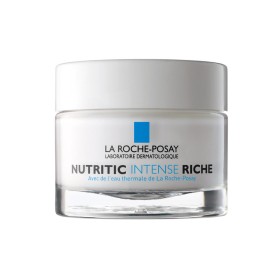
  • Nutritic Intense Riche 50ml. The denser version, for very dry skin or for the months when cold and wind make the difference. Chosen by those who feel the regular texture doesn't last until evening.
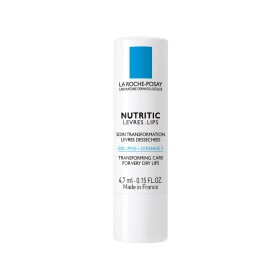
  • Nutritic Lips 4.7ml. A stick for dry to very dry lips, with MP-Lipids, shea butter, and ceramides. Non-oily feeling, repeated as needed throughout the day. It's the part of the range most easily forgotten and most often missing in winter.

Practically: Intense if your skin is dry, Intense Riche if it is very dry or if we are in the heart of winter, and Lips in parallel, because lips don't have sebaceous glands and dry out first.

When People Use It

In practice, Nutritic appears at very specific times. In the first ten days when heating turns on and the face starts to flake around the nose. In people who work in air-conditioned offices all day and go out into the cold in the evening. In skins that have become drier after forty or after menopause and no longer recognize their old hydrating. In those who have started retinol or acids and need a richer base to withstand the routine. On plane trips, where the dry cabin air dries face and lips within hours. And after winter sports or the sea with salt and sun.

A doctor is needed when dryness is accompanied by intense itching that doesn't subside, by plaques with clear boundaries, by cracking that bleeds, by diffuse redness and swelling, or when it persists despite proper care. Conditions such as atopic dermatitis, psoriasis, and seborrheic dermatitis are medical diagnoses and belong to the dermatologist. The range's products are cosmetics, improving the appearance and feel of dry skin, not medicines, and do not replace medical care.

Frequently Asked Questions

What's the difference between Nutritic, Toleriane, and Hydraphase?

They address three different needs. Nutritic is for dry to very dry skin and works with lipids, meaning nutrition and replenishment of the lipid mantle. Hydraphase is for dehydrated skin and works mainly with hyaluronic acid, meaning water. Toleriane is for sensitive and reactive skin, with an emphasis on sparse composition and tolerance. If your skin tightens and flakes, Nutritic. If it's dull and tight but not rough, Hydraphase. If it burns with everything, Toleriane.

Nutritic Intense or Nutritic Intense Riche?

Intense covers dry skin in everyday life. Intense Riche is denser and intended for very dry skin or the most demanding seasons. Many alternate the two throughout the year, Riche in winter and Intense the rest of the year.

Is it for oily but dehydrated skin?

No, it's not the right choice. Oily skin that is dehydrated needs water, not extra lipids, so light hydrators with hyaluronic acid are better. Nutritic is designed for dryness and can feel heavy on oily skin.

Is it for atopic dermatitis or eczema?

Atopic dermatitis and eczema are dermatological conditions that require diagnosis and treatment by a doctor. A cosmetic can support the daily care of very dry skin but does not replace therapeutic treatment. Ask your dermatologist what suits your specific case.

Does it go around the eyes?

The area around the eyes has thinner skin, and facial creams are not always intended for it. Avoid the immediate eyelid margin, and if you want targeted care, prefer a product labeled for the eye area.

Can it be combined with retinol or acids?

Yes, and it's actually one of the most common reasons people switch to a richer cream. Apply the active first to clean skin and the nourishing cream on top, or use the cream as a layer before and after if your skin reacts. Start thin and gradually increase.

Can it go under makeup?

Yes, as long as you allow two to three minutes for it to absorb. In denser textures, like Riche, a smaller amount in the morning works better under foundation, while a generous layer suits evening more.

Can I use it during pregnancy or breastfeeding?

These are cosmetics for external use, but during pregnancy, skin sensitivity changes, and each case is unique. Ask your pharmacist or doctor before adding anything new.

From what age can it be used?

It is intended for adults with dry facial skin. For babies and young children with very dry skin, there are other, specially designed ranges, and the pediatrician's guidance is the safest first step.

How soon does it show results?

The feeling of comfort and the end of tightness are usually immediate, from the first application. Improvement in texture and flaking takes about two to four weeks of daily use, because that's how long the skin's renewal cycle takes.

Does it contain fragrance or parabens?

Formulas for dry and sensitive skin are designed with sparse composition, but the exact list differs by product and formula revision. If you have known sensitivities, read the ingredients on the packaging or ask your pharmacist.

How is it stored?

At room temperature, away from direct sun and moisture, with the cap well closed. After opening, follow the package's expiration date. Keep the lip stick closed to prevent it from softening in high temperatures.

Cosmetic products. The reported actions refer to cosmetic action, in accordance with Regulation (EC) 1223/2009. The text is for informational purposes and does not replace the advice of a doctor or pharmacist.

2 Products


//