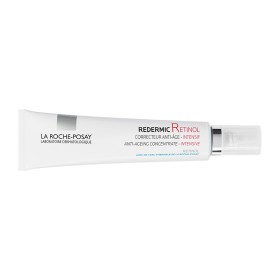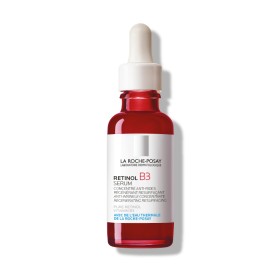
La Roche-Posay's Retinol series is based on the most studied anti-aging active ingredient in dermocosmetics, retinol. According to the manufacturer, the formulas combine pure retinol with progressively releasing retinol, a molecule that gradually releases pure retinol, so the corrective action is maintained within the tolerance limits of sensitive skin. It is addressed to those who see deep wrinkles, uneven texture, sagging in the outline and signs of photoaging, but also to those who have never used retinol and want to start without irritating their skin.
The world writes it in many ways: Retinol, Retinol B3, Retinol, retinol, retinol, retinolh, Redermic Retinol, Redermic R, La Roche Posay retinol, larose posay retinol, laroche poche retinol, la rose posay retinol, Roche posay retinol b3. All these spellings lead to the same series.
Retinol is a form of vitamin A. It does not act as is. Inside the skin, it undergoes a chain of conversions, from retinol to retinal and finally to retinoic acid, which is the biologically active form. Retinoic acid binds to specific receptors inside cells and influences the rate at which they renew themselves. Each step in this conversion is accompanied by a loss of potency, and this is precisely why retinol in a cosmetic is clearly milder than a prescription retinoid, but also clearly more tolerable.
In practice, retinol accelerates the exfoliation of the surface, so the skin looks less dull and smoother. It affects pore function and sebaceous activity, which is why it is also found in routines with a tendency to imperfections. And, over time, it improves the quality and texture of the skin, reducing the appearance of fine lines and more established wrinkles. But it must be said clearly: this is a cosmetic improvement in appearance. Retinol in a cosmetic does not reverse aging and is not a medicine.
The second thing that characterizes retinol is time. It is not an active ingredient you test for ten days. Cell renewal of the epidermis takes weeks, and changes in texture and the appearance of wrinkles usually become noticeable after two to three months of consistent use. Anyone who stops in the second week because they saw no difference did not give the product a chance to work.
The term retinization describes the period of skin adaptation to retinol. Because the active ingredient accelerates the renewal cycle, in the first weeks the skin may experience mild dryness, slight tingling shortly after application, minor flaking, especially around the nose and mouth, and temporary sensitivity. This does not mean the product is not doing you any good. It means you are going faster than your skin can handle at the moment.
The safest way to start is twice a week, in the evening, on clean and completely dry skin. After two or three weeks without discomfort, go to every other evening. If this passes smoothly, you can try daily use. Many people with sensitive skin remain permanently at three times a week and have excellent results, because consistency counts more than frequency. A useful tip for the beginning is the sandwich method: a thin layer of moisturizer, then retinol, and moisturizer again on top. It reduces intensity without canceling the action.
But there is also a limit. Mild dryness and minor flaking are expected. Intense redness that does not subside, a burning sensation, swelling, vivid itching, pustules or skin that cracks are not normal adaptation. In these cases, stop, keep for a few days only mild cleansing, hydration and sunscreen, and if it does not recover, consult a dermatologist or your pharmacist.
Retinol is a molecule unstable to light and oxygen. Exposure to UV radiation decomposes it, so applying it during the day simply means you are wasting the product. This is the first reason it is applied in the evening. The second is practical: the skin goes through its renewal phase during the night, so evening application finds better conditions. For the same reason of instability, packaging of products with retinol is opaque and often with a pump, and the product is stored closed, away from light and high temperature, not on the bathroom windowsill.
Sunscreen is a separate issue and is mandatory. Because retinol accelerates exfoliation, the skin temporarily has a thinner surface layer and is more sensitive to solar radiation. Without daily broad-spectrum protection, you risk irritation and the appearance of discoloration, that is, exactly the opposite of what you are aiming for. And a note of realism: no indicator offers complete protection and sunscreen needs to be repeated during the day when there is real exposure.
The most common occasions are the moment when the lines stop disappearing when the face is at rest, the texture of the skin that looks rough and uneven, the pores that appear more visible and the signs of photoaging after years of exposure. Many start in autumn or winter, when solar exposure is smaller and the adaptation phase passes more easily.
Retinol is not for everyone and for every moment. If you have active dermatitis, eczema, rosacea in flare-up, open wound or skin that has recently undergone surgery, it is not the right time. If you are already following a treatment prescribed by a doctor, inform them before adding retinol. And in any case of persistent irritation or reaction, the right move is an evaluation by a dermatologist.
No. Retinoids, including retinol in cosmetics, are avoided as a precaution during pregnancy and breastfeeding. If you are pregnant, breastfeeding or planning a pregnancy, stop and consult your doctor about what you can use instead.
Yes, and it is a non-negotiable part of the routine. Retinol increases the skin's sensitivity to solar radiation. Without daily broad-spectrum protection, the risk of irritation and the appearance of discoloration increases, and the result you are aiming for is undermined.
Not recklessly and not in the same application. Retinol together with AHA, BHA or vitamin C in the same evening routine significantly increases the risk of irritation. The safe way is separation: vitamin C in the morning, retinol in the evening, and acids on different days from retinol. If you are a beginner, use retinol alone for a few weeks before adding anything else.
Mild dryness, slight tingling and mild flaking in the first weeks are expected and subside as the skin adapts. Stop if intense and persistent redness, a burning sensation, swelling, pustules or skin that cracks appear. Return to mild cleansing, hydration and sunscreen, and if it does not recover within a few days, see a dermatologist.
Twice a week, in the evening, on completely dry skin. Increase to every other evening after two or three weeks without discomfort, and daily use only if the skin tolerates it comfortably.
The Retinol B3 serum combines retinol with niacinamide and is the most gentle starting point. The Redermic Retinol is a more intensive proposal, targeted at established wrinkles, and suits skin that has already adapted to retinol.
There is no fixed limit. Most incorporate it from the late twenties to mid-thirties, when the first permanent lines appear. It is not recommended for children and adolescents.
Only if the product explicitly states it. The skin there is much thinner and reacts more easily. For the eye area prefer a formula designed for it, and always stay away from the eyelid.
You can, if you are consistent with sunscreen and avoid intense exposure. If you are preparing for a holiday with many hours in the sun, many prefer to pause temporarily and resume gradually afterwards.
Well closed, in a cool place, away from direct light and humidity. Retinol is unstable to light and oxygen, so the opaque packaging must remain closed when not in use.
Cosmetic products. The reported actions refer to cosmetic action, in accordance with Regulation (EC) 1223/2009. The text is for informational purposes and does not replace the advice of a doctor or pharmacist.